
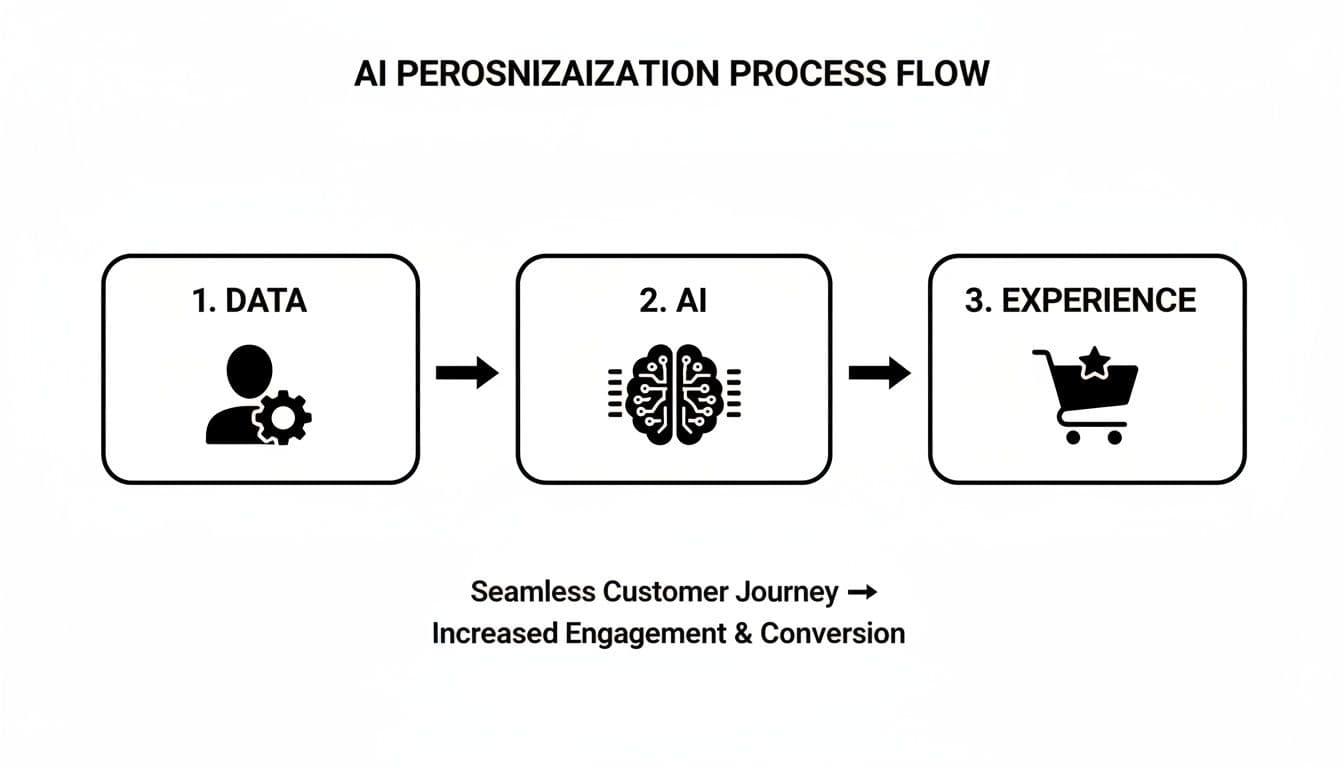
Most of the companies assume that they know their customers. But in reality, it is not true. Because a typical company uses a bunch of different tools to run its business. Sales has a CRM. Marketing has an email platform. There’s a website tracking clicks, a support team fielding calls, and maybe a cash register system in physical stores. Every one of these tools has its own little record of who a customer is. And those records rarely match up.
One system knows a customer by their email. Another only has a loyalty card number. A third has nothing but the phone number someone gave a support agent last year. Nobody has planned to do this in the same way. So it will happen when the data gets spread across the ten different tools that never get connected with each other. Salesforce Data Cloud was built to fix that.
In this article, we have discussed in detail how the Salesforce Data Cloud makes Personalization work. If you are looking to become a Salesforce Developer, then applying for the Salesforce Course can help in the same. This online course will help you learn at your own pace from anywhere.
What It Actually Does
Data Cloud pulls customer information in from all over the place- Salesforce tools, outside apps, website activity, purchase history- and puts it all in one spot. And it doesn’t always need to move the data physically. A lot of the time, it just connects to where the data already lives.
A few things make this genuinely useful:
- It figures out who’s who. This is the part that matters most. Data Cloud can look at “jsmith@email.com” in the CRM and loyalty card “8842910” from an in-store visit and realize: same person. Instead of five scattered, half-complete records, you get one real profile.
- It cleans up messy data. Every system formats things differently: dates, addresses, names. Data Cloud sorts through all that so teams aren’t stuck untangling mismatched formats before they can even use the information.
- It builds groups based on what’s happening right now. Not last month’s list. This week’s behavior. Think: people who checked out hiking boots twice but never bought them.
- This puts the information where it is needed. So many of the tools are just dependent on the data and call it a day. Well, the Data Cloud pushed this learning into the marketing cloud, service cloud, commerce cloud, as well as outside the ad platforms. This will help you to make the right message reach the customer.
Why Customers Notice the Difference
Things stay consistent.
Whether someone calls support or opens an email, the company is working off the same picture of them. No mixed signals.
It’s faster.
Old-school personalization ran on data that was already stale by the time anyone used it. Data Cloud works closer to real time, so a business can act while someone’s interest is still fresh, not three days after they’ve moved on.
Predictions get sharper.
Paired with Salesforce’s AI tools (Einstein), clean and connected data means better guesses about who might cancel a subscription, what someone’s likely to buy next, or when to actually send that email.
Targeting gets tighter.
Instead of vague groups like “women, 25 to 35,” companies can zero in on real behavior: people who bought running shoes, read a bunch of fitness articles, but never picked up workout gear. That’s the gap between an offer that feels random and one that feels almost too accurate.
Everyone’s finally on the same page.
Sales, support, marketing, and the online store all pull from one shared profile. Personalization stops contradicting itself from department to department.
Where This Shows Up
– Retail: recommending products based on what someone’s actually browsed and bought, in stores and online.
– Banking and insurance: offering products that make sense for someone’s whole relationship with the company, not just a single account.
– Healthcare: sending relevant reminders and updates while staying inside privacy rules.
– Travel: tailoring deals around past trips and whatever someone’s currently searching for.
What Companies Still Have to Get Right
None of this runs on autopilot. Businesses still need decent data hygiene and clear rules for how identities get matched. Get the matching wrong, and you end up stitching the wrong data to the wrong person, which is worse than doing no personalization at all. Privacy laws like GDPR and CCPA aren’t optional footnotes either. They shape what data a company can even collect in the first place, let alone use. So professionals who have completed training from the Salesforce Institute in Noida can get the opportunity to solve such complexities.
There is also the ongoing work that nobody would like to think of. This may include:
- Deciding how long data should be kept
- Deciding who gets access to what
- Regularly checking that nothing has quietly drifted out of compliance
Skip that part, and the whole system becomes a liability instead of an advantage.
Why Take Training in Pune?
As we know that Pune is an IT hub, and getting Salesforce Classes In Pune will lead you closer to the companies that hire for such roles. So this training from Pune improves your chances of career growth.
Conclusion:
Data Cloud doesn’t magically create personalization out of nowhere. What it does is remove the thing that’s been blocking it all along: data scattered in pieces across too many systems. Once a business can see the whole customer instead of five fragments of one, personalization stops feeling like a guessing game. It starts feeling like the company is actually paying attention. That only works, though, if it’s built on solid data habits and some restraint about how customer information gets used.