
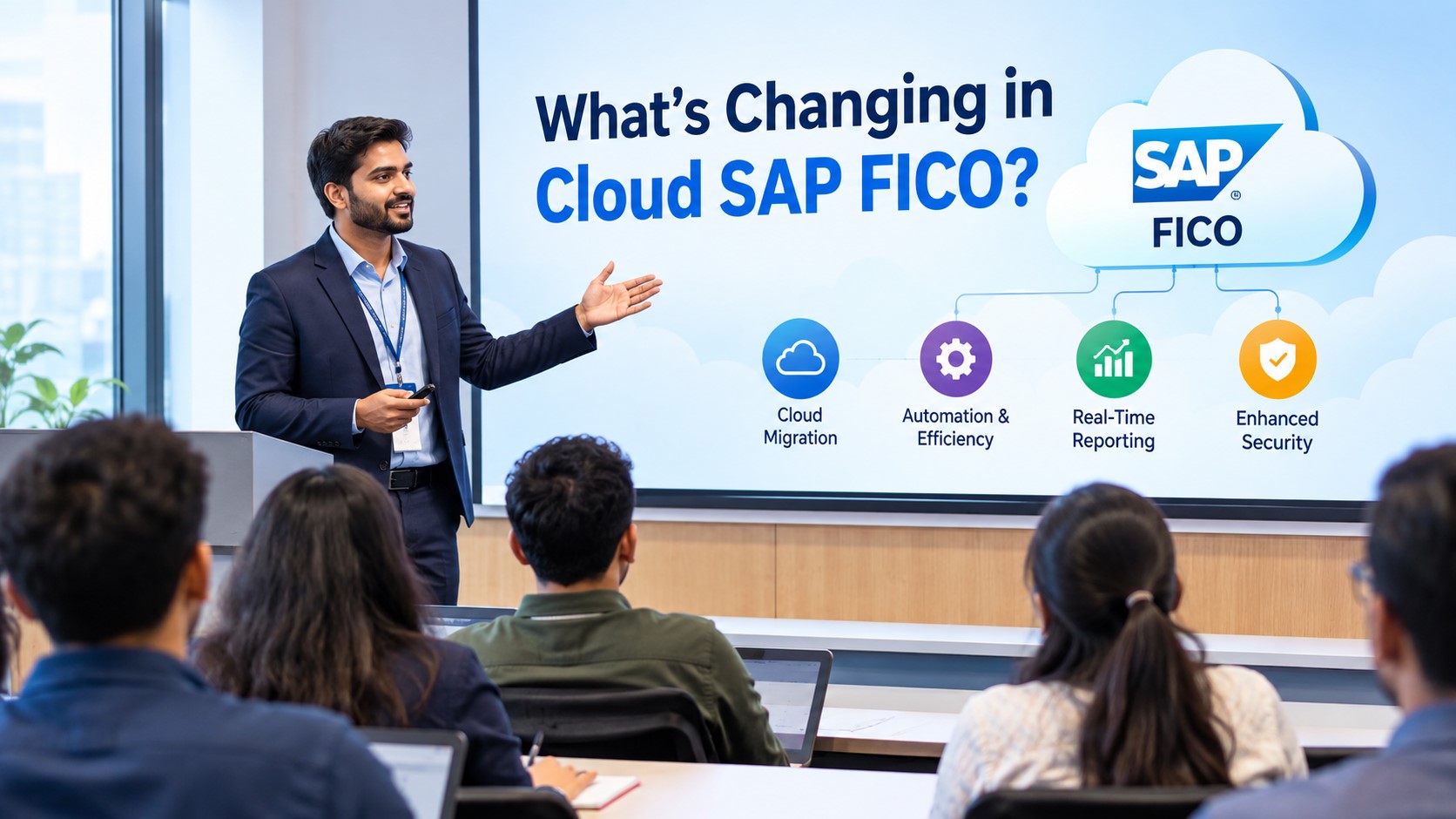
A few years ago, most companies were used to run SAP on their own servers and the finance team were used to working in a system that was not changed in a decade. But nowadays, things have been changed and more of the companies are moving their accounts, costing and reporting to the cloud.
This is how the job of SAP FICO consultant is changing a lot. To understand what the role of SAP FICO consultant looks like, taking SAP FICO Course is the best way. Taking the course can help you understand these changes easily. So, let’s begin discussing this in detail:
Understanding What is Changing:
Less manual work
SAP has added a lot of automation to finance. Incoming bank payments can be matched to open invoices automatically. Vendor invoices can be read and posted with very little typing. There is also an assistant called Joule, where you can ask a question in plain words and get an answer or be taken to the right screen.
None of this replaces the finance team. It takes away the boring, repetitive parts, like keying in data and chasing small mismatches. What’s left is checking, explaining and advising. A consultant who can set these features up properly will have an edge.
Faster closing and consolidation
Closing the books used to take weeks in many companies. SAP now offers Advanced Financial Closing, which lists every close task, who owns it and whether it’s done. Group Reporting handles consolidation inside S/4HANA, so companies no longer need a separate tool for it.
The result is a shorter close, sometimes just a few days, with fewer spreadsheets passed around by email.
Reports where the data is
Reporting used to mean running a job and waiting. Now Fiori apps show live figures for profit, cash, and costs right inside the system. SAP Analytics Cloud sits on top for budgeting and forecasting.
Because of this, FICO consultants are expected to know a bit about reporting and planning, not only configuration. Employers like people who can build the setup and also explain what the numbers say.
Tax and compliance
Rules keep getting stricter, and many are now digital. In India, GST e-invoicing and e-way bills are part of daily finance work. Cloud systems get regulatory updates faster and can connect to government portals directly, which lowers the risk of mistakes.
Companies working across several countries gain too. Local tax and reporting rules come as ready-made packages, so there is less custom coding to maintain.
Keeping the core clean
SAP now advises customers to avoid heavy changes to the standard software. Any extra features should be built outside the core, using SAP Business Technology Platform. The reason is practical. A system full of custom code is hard to upgrade, and cloud systems are updated often.
For consultants, this means learning a little about APIs and add-on tools, and getting used to solving problems without changing the standard code.
What it means for jobs
Companies still need SAP finance people, especially those who understand both accounting and the newer cloud tools. The skills employers ask about most are:
– S/4HANA finance configuration and data migration
– Universal Journal and the new asset accounting
– Fiori apps and basic reporting
– How FICO connects with MM and SD
– A working idea of how automation fits into finance
SAP FICO Certification Training is a good way to build these skills in order and prove them with a credential. A Certificate is not proof of your excellence, but it shows recruiters that you have understanding of tech current version of the software.
Picking how to learn
A SAP FICO Online Course works well if you have a job or live far from a training hub. You study at your own pace and can replay sessions. Just make sure you get access to a practice system, because reading about SAP is not the same as using it.
Why Take Training in Pune?
Pune is the best place for people who are willing to learn face to face from instructors. As there are many IT institutions and finance teams that use SAP, so classroom batches are preferable, and learn from the trainer whom you can question directly. Also, you can connect with the classmates who can also help with tech placement.
If you have already knowledge of the basics and are looking for a specific certificate, then apply for the certification training with mock tests and hands-on practice.
Whatever you choose, ask three questions before paying. Does the syllabus cover S/4HANA? Will you get real practice, not just slides? And has the trainer worked on actual implementation projects?
Conclusion:
SAP finance is moving to the cloud, and the tools are becoming faster and more automated. People who learn the newer version now, through a good SAP FICO Course of any kind, will find it easier to get hired as more companies make the switch.